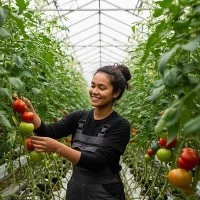
Walk into a film greenhouse on a hot afternoon and the first thing you notice is not the heat. It is the stillness. The side walls are rolled up, the roof vents are open, and still nothing moves. The air just sits there, heavy, and the leaves start to curl at the edges.
Growers in hot, dry regions know this feeling well. A greenhouse that behaves beautifully in spring can turn on you in summer. Ventilation works when there is wind to carry the hot air out. On a still day, an open vent is mostly a hole in the wall. It helps, but it does not do the job on its own.
That is why the conversation in these climates has shifted. It used to be mostly about the structure - how wide the spans are, how tall the gutters sit. Now it is just as much about what happens inside once the sun is up. Shade, air movement, and water all have to work together, and if one of them is missing, the other two end up carrying too much.
Shade is usually the first thing people reach for, and it is also the easiest to get wrong. Put a shade net up too early in the day and the crop loses light it could have used. Leave it too late and the heat is already inside, sitting in the soil and the steel. The growers who get the best out of shading tend to treat it as a daily decision, not a setting they fix in May and forget about until September. They watch the sky in the morning, they watch the crop at noon, and they adjust.
Then there is the wet wall. A fan-and-pad system does real work on a dry afternoon - air comes in through the wet pads, cools as it crosses, and the fans pull it through the house. But it is not free. The air that comes out is cooler and damper, which is fine for a leafy crop and less fine for one that hates wet leaves. And the pads themselves need looking after. Let them dry out in patches, let dust build up, and the cooling starts to fall away exactly when you need it most. Nobody checks a wet wall in the cool of the morning and calls that a test. You check it at two in the afternoon.
Roof vents matter here too, in a way that surprises people who are used to tunnel houses. Hot air wants to rise. Give it a way out at the top and the whole house breathes better, even when there is no breeze outside. A roof vent that only opens halfway, or a motor that stopped working last season and nobody noticed, can cost a grower more than a new fan would have.
None of this is new technology. That is the point. The growers getting the best results in hot climates are not usually the ones with the newest equipment. They are the ones who walk the house at the hottest hour, feel where the air is stuck, and fix the small things - a vent that sticks, a shade net that hangs wrong, a pad that has gone dry at one end. A greenhouse in a hot climate is not a building you finish and leave alone. It is something you run, hour by hour, through the summer.