


In the field of greenhouse vegetable cultivation, tomatoes have always held a significant position. Implementing targeted measures can notably promote early ripening and increase yield.
At Yutuo Agriculture Group, we work closely with growers and agricultural researchers to explore effective strategies for maximizing tomato production inside greenhouses.
Below is a detailed introduction to these practical methods.
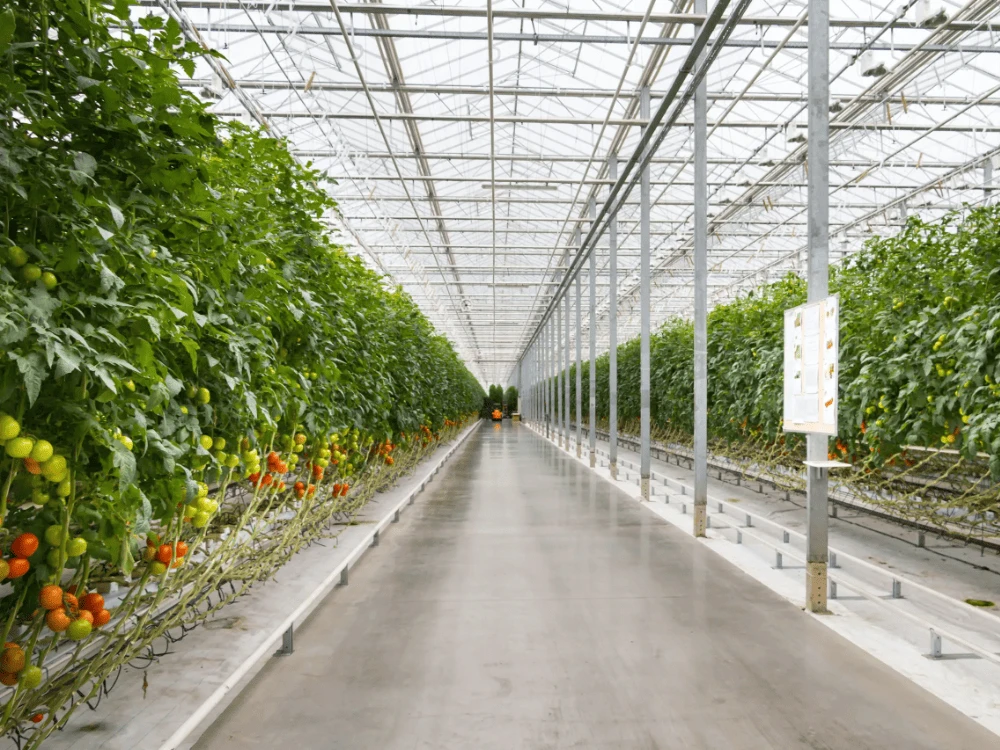
1. Use High-Quality, Disease-Resistant Varieties
Choose hybrid varieties bred for greenhouse conditions:
Modern hybrid varieties bred for greenhouse use often show stronger resistance to common diseases like Fusarium wilt, Tomato Mosaic Virus, and Powdery Mildew. They also tend to produce uniform, higher-quality fruits with better shelf life.

2. Optimize Greenhouse Climate Control
Key Factors: Temperature, Humidity, and Light
Temperature: Tomato plants thrive best in day temperatures of 22–26°C and night temperatures of 17–19°C. Temperature fluctuations or excessive humidity can lead to flower drop, poor fruit set, or increased disease pressure.
Humidity: Maintain 60–70% to reduce fungal diseases.
Tomatoes are light-loving plants. Ensuring sufficient and uniform light exposure is key to maintaining strong photosynthesis and fruit development.
3. Precision Irrigation & Fertilization
During prolonged overcast or rainy weather, avoid watering whenever possible. If irrigation is necessary, schedule it for midday on sunny days, using light watering methods.
When fertilizing, refrain from using chemical fertilizers. Instead, opt for water-soluble active microbial biofertilizers. Additionally, apply foliar sprays containing active amino acids, boron, calcium, and potassium fertilizers, supplemented with a 1% glucose solution. This approach ensures tomatoes receive essential nutrients under low-temperature and low-light conditions while reducing the occurrence of physiological disorders caused by cold stress.
4. Timely Pruning and Leaf Trimming to Promote Fruit Growth
Promptly remove diseased, aged, yellowed leaves, and lateral shoots, ensuring they are completely excised from the base. When the fruits reach the mature green stage, strip all leaves below the fruit clusters based on the plant's growth condition, followed by a broad-spectrum fungicide spray.
This practice enhances fruit expansion, improves ventilation and light penetration within the canopy, and facilitates better fruit coloration.
5. Pest & Disease Management
For overwintering tomato crops, the combination of high humidity and low temperatures during continuous overcast/rainy periods creates ideal conditions for disease outbreaks. Therefore, humidity control becomes the critical preventive measure.
Smoke-based fumigants and powder formulations prove particularly effective for pest/disease management. Unlike liquid sprays, these application methods provide significant control without elevating greenhouse humidity levels, making them ideal solutions for protected tomato cultivation.
6. Supplementary Pollination to Improve Fruit Setting Rate
Method 1: Two days prior to chemical treatment of flower clusters, gently vibrate the inflorescences to facilitate pollination when greenhouse humidity is relatively low.
Method 2: During cold seasons, vibrate flower clusters 1-2 times daily after 9:00 AM to enhance pollination and promote earlier market availability.
Tomatoes grown under low-temperature conditions often suffer from prolonged color development, resulting in poor fruit coloration and reduced storage tolerance. These supplementary pollination techniques effectively address these quality issues.
7. Leverage Data and Technology
Smart greenhouse systems-featuring real-time sensors, climate controllers, and data dashboards-can help growers make better decisions. AI-driven recommendations for irrigation timing, CO₂ dosing, and fertigation schedules can lead to improved yields and resource efficiency.
Conclusion
Master these greenhouse tomato cultivation techniques, and your bumper harvest is within reach! Take action now to enjoy a prolific tomato yield!
Ready to Boost Your Tomato Production?
Contact our experts today for a free consultation!


