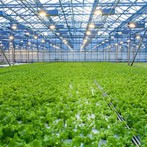
In modern agriculture, greenhouses play a pivotal role in extending growing seasons, and enhancing crop yields. Choosing the right glazing is critical for any greenhouse. High light transmission directly drives plant growth, so greenhouse glass must be extremely clear. At the same time it must be strong and weather-resistant. Here, we explore the types of glass commonly used in greenhouses and their unique advantages, and highlights the two main tempered-glass options – hollow (insulated) tempered glass and single tempered glass – used in modern glasshouses.

1. Horticultural Float Glass (Non-Tempered): Cost-Effective Clarity
Float glass, produced by molten glass floating on a bed of tin, offers high transparency and affordability. While less durable than tempered glass, it is often used for greenhouse sidewalls where structural stress is lower. This glass is suitable for small greenhouses.
2. Low-E Glass: Energy Efficiency Redefined
Low-emissivity (Low-E) glass, coated with a thin metallic layer, excels in thermal insulation. By reflecting infrared radiation, it blocks excess solar heat in summer. This makes it indispensable for greenhouses in extreme climates, such as desert regions, where temperature control is critical.
3. Hollow Tempered (Insulated) Glass: Exceptional Durability And Superior Insulation Efficiency
Hollow tempered glass is essentially a sealed insulated glass unit (IGU) made of two or more sheets of tempered float glass. Because both layers are tempered, the panel retains the high strength and safety of tempered glass. The rigid double-pane assembly is highly durable and suitable for roofs and walls.
Hollow tempered panels are popular in cool or temperate climates, large commercial greenhouses and conservatories where heating demand is high.
In short, hollow tempered glass gives the strongest, most thermally efficient glass enclosure for a greenhouse.

4. Single Tempered Glass:
Single tempered glass is a single sheet of tempered float glass, typically 4–6 mm thick. It provides excellent optical clarity (≈90% light transmission) with minimal distortion. However, a single pane offers little insulation beyond its thickness.
Single tempered glass is commonly used in milder climates or smaller greenhouses where insulation is less critical.
Growers may pair single glass with separate shading or insulation measures if needed.

Comparison Between Yutuo's Customized Hollow Tempered Glass and Single Tempered Glass
Light transmission:
Both types use clear glass, so raw light throughput is nearly the same. Both can be AR-coated or diffused as needed.
Thermal performance:
Hollow (double) glass has much better insulation than single glass. A properly sealed double-pane unit can roughly double the R‑value of a single pane, reducing heat loss significantly.
Weight and cost:
Hollow insulated glass is heavier (two panes + spacer) and costs more to produce and install. Single glass is lighter and less expensive. Builders must design stronger frames for the extra weight of insulated panels.
Ideal use:
In cold or energy-intensive projects, hollow tempered glass is often preferred despite the higher cost, due to its energy savings. In warm or budget-limited projects, single tempered glass may suffice. The choice depends on climate, crop requirements and greenhouse size.

Turnkey One-stop Customized solution in China
13 years of greenhouse manufacturing experience.
We can provide modern, high-tech, intelligent agricultural greenhouse solutions and material supply according to different regions.
Conclusion
Selecting the right glass for a greenhouse is not just about transparency-it's about harmonizing light, energy, and durability. Growers and designers should evaluate local climate and crop needs. In every case, choosing the appropriate high-performance glass – tempered for safety and clarity – is essential for optimal plant growth and system efficiency.
For customized solutions, consult our experts to design a greenhouse that aligns with your regional conditions and crop goals.