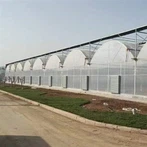
From the emergence of the first modern greenhouse in the 17th century to 2025 of this century, with the improvement of materials and construction technology, greenhouses have become more and more efficient and practical. In particular, smart greenhouses have become a model for modern agricultural planting.
Therefore, more and more people want to know what facilities are needed for planting inside modern intelligent greenhouses. The following is a detailed introduction:
4 Key System In Smart Greenhouses 2025:
1. Planting system
The planting system is the core part of the smart greenhouse, mainly including the substrate cultivation system and the hydroponic system. The substrate cultivation system usually includes a planting trough, a substrate, a support frame, etc. The planting trough can be a plastic trough, a wooden trough or a trough made of other materials to accommodate the substrate and plants. The substrate usually uses peat soil, perlite, vermiculite and other materials, which have good air permeability and water retention, and can provide a stable growth environment for plants.
The hydroponic system provides the water and nutrients required by plants through a nutrient solution circulation system, including a nutrient solution storage tank, a circulation pump, a pipeline, a planting trough, etc. The advantage of the hydroponic system is that it can accurately control the growth conditions of plants and improve the yield and quality of crops. The hydroponic system also requires regular maintenance and replacement of the nutrient solution to ensure the healthy growth of plants.

2. Irrigation system
The irrigation system is an indispensable part of the smart greenhouse. It can automatically adjust the irrigation amount according to the water demand of the plants and the soil moisture to ensure the water supply of the plants. Common irrigation systems include drip irrigation systems and sprinkler irrigation systems.
The drip irrigation system directly delivers water to the roots of plants through drip irrigation pipes. It has the characteristics of water saving and high efficiency, and is suitable for substrate cultivation and hydroponic systems.
The sprinkler irrigation system sprays water to the leaves and stems of plants through nozzles, which is suitable for large planting areas.
When choosing an irrigation system, it is necessary to design it reasonably according to the growth habits of crops and the layout of the greenhouse to achieve the best irrigation effect.

3. Environmental Control System
The environmental control system is an important part of the smart greenhouse. It can automatically adjust the temperature, humidity, light and other environmental factors in the greenhouse according to the growth needs of plants and changes in the external environment.
The temperature control system includes heating equipment and cooling equipment. Heating equipment such as radiators and electric heating wires are used to provide heat when the temperature is low to keep the temperature in the greenhouse stable; cooling equipment such as wet curtains and fans are used to reduce the temperature in the greenhouse when the temperature is high.
Natural ventilation mainly relies on the window opening system of the greenhouse, such as top windows and side windows, to adjust the air circulation in the greenhouse through the natural flow of air; forced ventilation uses exhaust fans and other equipment to force the air in the greenhouse to be discharged to keep the air fresh and circulated.
The shading system is used to adjust the light intensity in the greenhouse to prevent strong light from causing damage to plants. External shading systems such as shading nets and shading boards are installed on the outside of the greenhouse and can effectively block part of the sunlight from entering the greenhouse; internal shading systems are installed inside the greenhouse and can adjust the opening and closing of the shading nets as needed.

4. Intelligent control system
The intelligent control system is the brain of the intelligent greenhouse. It uses various sensors and control devices to achieve real-time monitoring and automatic control of the greenhouse environment.
Sensors include temperature and humidity sensors, light sensors, carbon dioxide sensors, etc., which can monitor the environmental parameters in the greenhouse in real time and transmit data to the control cabinet.
The control cabinet automatically adjusts the operating status of the temperature, humidity, light, irrigation and other equipment in the greenhouse according to the preset programs and parameters to meet the growth needs of plants.
When using the intelligent control system, the sensors need to be calibrated and maintained regularly to ensure the accuracy of the data and the stability of the system.

conclusion
Smart greenhouses also require some auxiliary equipment, such as greenhouse access control systems, lighting systems, power supply systems, etc., to ensure the normal operation and management of the greenhouse.