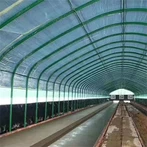
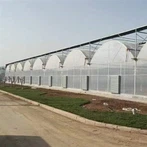
The Semi-Closed Greenhouse Is Getting a Second Look
A few years ago, if you mentioned a semi-closed greenhouse to a grower, you would usually get the same answer: too complicated, too expensive, not for us. Lately the answer has started to change. Not everywhere, and not for every crop - but the question is being asked more often, and by people who are not easily impressed by new ideas.
The appeal is easy to see once you stand inside one. In a normal greenhouse, you open the vents to cool the house and most of your carbon dioxide goes straight out with the hot air. In a semi-closed house, the air is moved through ducts and fans instead, so the CO2 you add stays where the plants can use it. Humidity stays steadier too. The crop does not swing between damp mornings and dry afternoons the way it does in a house that lives or dies by the wind outside.
That steadiness is what growers talk about first. Not yield figures - those get argued about for years - but the way the crop looks day to day. Fewer stressed mornings. Fewer days when the plants look tired by three o'clock. Pests have a harder time getting in, too, because the house is not wide open to whatever blows past. For a grower who has spent a season fighting whitefly, that alone is worth a serious look.
But the hard part is the air itself, and anyone selling one of these houses should say so plainly. A semi-closed greenhouse does not get rid of the heat. It moves it, and moving heat takes fans, ducts, and a plan for where the damp air goes. On a humid night, the house can hold too much moisture, and then you need dehumidification or you trade one problem for another. The system works, but it asks more of the person running it. You cannot set it and walk away.
That is why the sensible way into it is usually a high-value crop, and a house that is not too big for a first try. Tomatoes, cucumbers, strawberries - crops where a steadier climate shows up in the quality of the fruit, and where the extra cost has somewhere to go. A grower who tries it on a low-margin crop, in a climate that never really needed it, will be disappointed, and the disappointment will not be the house's fault.
There is also a quieter reason the idea is spreading. Energy prices have made people look harder at what they are heating and cooling, and a house that keeps its air inside is easier to think about than one that throws it away all day. It is not a magic answer to energy costs. The fans use power. But it changes the question from "how much air can we move?" to "how little air can we get away with moving?" - and that is a better question to be asking.
So the semi-closed greenhouse is not going to replace the ordinary ventilated house. It does not need to. It is a tool for a particular kind of grower, in a particular kind of climate, growing a crop that pays for the extra care. The growers who are looking at it now are not chasing a trend. They are doing the sums, walking a house that already runs this way, and asking the person who runs it what the bad days look like. That is the right way to judge it.